On most days, a Filipino freelancer or virtual assistant’s workspace consists of a laptop on any surface at home or in a coffee shop, an energy-giving beverage in hand, and a client call scheduled at 10 pm to match a U.S. time zone.
Paydays for the same workers of overseas companies also look quite similar.
For years, getting paid in dollars has meant navigating a maze. This involves waiting for international transfers to clear, losing a chunk to intermediary fees, and sometimes rushing to the nearest money changer before it closes to compare exchange rates in a hurried hassle. For overseas Filipino workers (OFWs), virtual assistants, and remote employees working for foreign companies, the routine is familiar—and so is the anxious struggle of watching the USD–PHP rate fluctuate and wondering, “Should I convert now or wait?”
Whether Filipinos are sustaining themselves or raising a family back home, this choice matters.
Timing is everything
Timing is of the essence. A few pesos’ difference in exchange rates can mean extra grocery money, tuition savings, a self-care treat, or a little more breathing room at the end of the month.
For many Filipino freelancers, income does not come in reliable, twice-a-month payroll cycles like it does for employees. Payments can vary per project, contract, or client. Mixing fluctuating exchange rates into this instability makes confident financial planning a losing game.
That decision-making power should be back in the hands of globally connected Filipinos, and RCBC is enabling this convenience without requiring users to leave the app.
A digital dollar wallet for the borderless workforce
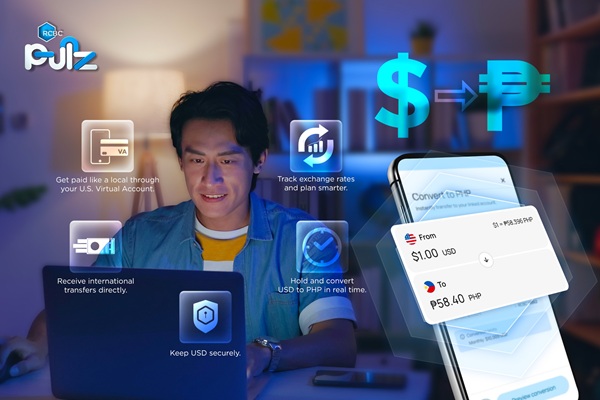
For the borderless workforce, a digital dollar wallet could be a game-changer. RCBC has rolled out a new USD hold-and-convert feature on its Pulz digital banking platform, in partnership with U.S.-based payments solutions provider Meridian.
- Cross-border users can access centralized features in one app, allowing them to monitor exchange rate movements, plan expenses and remittances, and maximize the peso value of their earnings.
- Filipinos can hold their U.S. dollar balances in-app and convert them to Philippine pesos in real time when exchange rates are favorable.
- Built on the existing U.S. Virtual Account feature, users can receive international transfers directly through the app without intermediary banks or complex routing processes.
- Freelancers can share their U.S. Virtual Account details with employers or link them to payroll services, making payments feel almost local, even if the client is thousands of miles away.
- It provides stability amid irregular income—something freelancers often face due to project-based work—by allowing them to hold USD and convert in portions when needed.
It marks a shift from the traditional “convert upon receipt” model. Instead of automatically exchanging dollars the moment they arrive, freelancers and remote workers can choose when to convert, giving them more flexibility and control.
More than a financial tool, the feature is a lifestyle saver. For a generation that works on Slack, Zoom, and global payroll platforms, being able to manage dollars and pesos from a single mobile screen feels less like a luxury and more like a natural next step.
The Filipino workforce is no longer defined by geography. A graphic designer in Cebu can work for a start-up company in San Francisco. A virtual assistant in Davao can support a team in New York. An OFW in the Middle East can send money home in minutes.
By allowing users to hold USD and convert on demand, RCBC Pulz acknowledges a simple reality: today’s Filipino earners are going global—and their financial tools must keep pace.
READ MORE FINTECH NEWS.