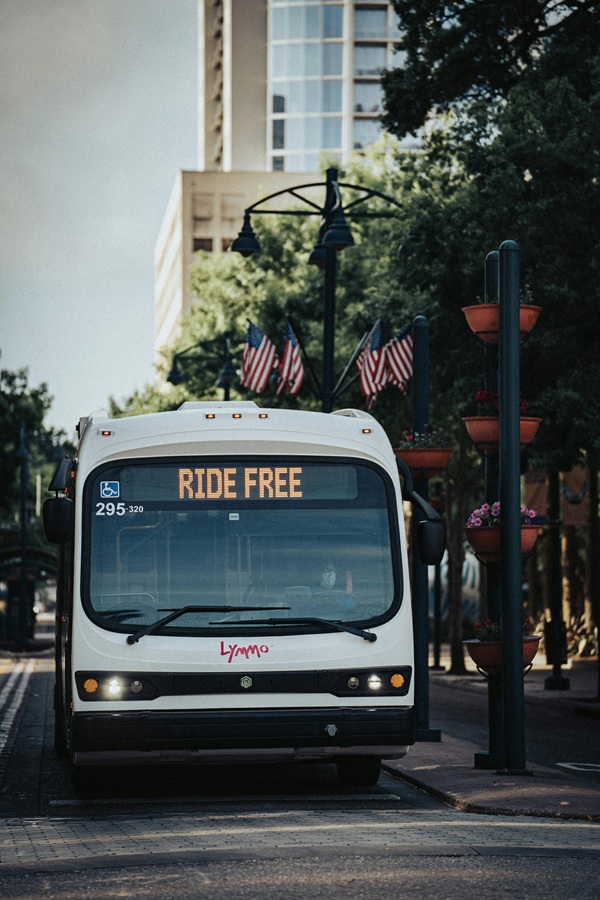
For the past several months, commuters in New Clark City have enjoyed a futuristic and fare-free ride experience aboard the country’s first publicly accessible self-driving buses.
But the free rides are set to end in June 2025—and as of now, no one knows how much passengers will be paying next.
Japan-based Zenmov, Inc. launched the autonomous bus system in partnership with MC Metro Transport Operation, Inc., bringing to life a smart, energy-efficient public transport project powered by the Smart Mobility Operation Cloud (SMOC). Seventeen of these driverless shuttles—capable of carrying up to 15 passengers each—currently operate across New Clark City, the Clark Freeport Zone, and Clark International Airport.
The pilot program, fully funded by Japan’s New Energy and Industrial Technology Development Organization (NEDO) and Zenmov, will run until mid-2025. Until then, all rides remain free while authorities gather data on commuter patterns and operational efficiency.
But what happens after the pilot wraps up? That’s still up in the air.
Despite the looming end of the free phase, the Land Transportation Office (LTO) and the Land Transportation Franchising & Regulatory Board (LTFRB) have yet to issue any fare structure or pricing guidelines. According to the Bases Conversion and Development Authority (BCDA), no payments will be collected until both agencies finalize the regulatory framework for fare collection.
“There are still no details on how much the rides will cost,” a BCDA official said, noting that decisions will come only after a full evaluation of the pilot’s data and feasibility.
In the meantime, the self-driving fleet continues to offer high-tech commuting powered by real-time data, smart dispatching, and zero emissions. Zenmov and MC Metro have also installed electric-assisted bicycles, smart poles, charging stations, and traffic-monitoring drones—laying the groundwork for a modern, green mobility ecosystem within Clark.
The demonstration project has been praised not just for its innovation but for its potential to reduce traffic, lower carbon emissions, and boost smart city development. But as the mid-2025 deadline approaches, riders and transport stakeholders alike are waiting for the next move: what happens when the rides are no longer free?
For now, commuters can enjoy the ride—literally—while it still costs nothing.
READ MORE MOBILITY NEWS.